DEUS ex MACHINA @ReBonkers DEUS ex MACHINA @ReBonkers DEUS ex MACHINA @ReBonkers DEUS ex MACHINA @ReBonkers DEUS ex MACHINA @ReBonkers DEUS ex MACHINA @ReBonkers DEUS ex MACHINA @ReBonkers DEUS ex MACHINA @ReBonkers DEUS ex MACHINA @ReBonkers DEUS ex MACHINA @ReBonkers DEUS ex MACHINA @ReBonkers DEUS ex MACHINA @ReBonkers DEUS ex MACHINA @ReBonkers DEUS ex MACHINA @ReBonkers DEUS ex MACHINA @ReBonkers DEUS ex MACHINA @ReBonkers
location: 4 Baruten Pogreb Street
9008 Hristo Botev, Varna, Bulgaria
GPS coordinates: 43.2038404, 27.8999183
ReBonkers: Historical Background
The stone structure now occupied by ReBonkers is generally dated to 1823, when it was built by the Ottoman authorities as a gunpowder store. Although it is often described informally as a “bunker,” the historically accurate architectural term is gunpowder magazine. The building is officially identified as a protected former gunpowder-storage facility associated with the Varna fortress, although one recent secondary source dates it to 1827 rather than 1823.
The Bulgarian word barut (“gunpowder”) entered the language through Ottoman Turkish barut. Black powder was the earliest known chemical explosive and remained the only widely known chemical explosive until the development of nitrocellulose, nitroglycerine, and other modern explosives in the mid-nineteenth century.
Varna’s former fortifications
The photograph above shows part of Varna’s former fortifications. Following the destruction caused during the Russo–Turkish War of 1828–1829, the Ottoman authorities repaired and expanded the fortress to the north and west. The principal reconstruction took place between 1832 and 1837 and created the enlarged Yeni Kale—the “New Fortress”—together with military barracks, warehouses, a hospital, and other facilities.
Construction drew labour and materials from across the Ottoman Empire. Some local historical accounts state that stone was reused from older fortifications and even transported from Pliska; however, this particular detail has not been confirmed by the stronger sources consulted. Sultan Mahmud II visited Varna in 1837, inspected newly constructed military facilities, and inaugurated a monumental fountain commissioned as part of the city’s reconstruction.
The enlarged fortress formed an irregular polygon protected by ramparts, walls, and a defensive ditch. Historical accounts differ over its exact dimensions and configuration: some describe approximately four kilometres of walls and six principal gates, while others record eleven gates and a larger defensive perimeter. It is therefore safer to describe the complex as an extensive fortified system rather than to present one disputed set of measurements as definitive.
The defensive network included several fortified positions, or tabias, among them Ali Bey Tabia, Yıldız Tabia (“Star Fort”), Kadir Baba Tabia, and Taş Köprü Tabia (“Stone Bridge Fort”). Kadir Baba Tabia was named after a Muslim holy man or martyr whose tomb stood at the site. A cultural-heritage record identifies the surviving powder magazine as part of the Kadir Baba fortification and the former fortress wall.
During the 1990s, the site became widely known as Bonkers, an underground club and one of Bulgaria’s early venues for alternative music. It played an important role in Varna’s independent music culture and is associated with bands including Rag Dolls, Babyface Clan, Pyromania, Big Mama Scandal, and Slang. The venue is also remembered locally as a setting for some of Varna’s earliest rave parties, beginning in 1994.
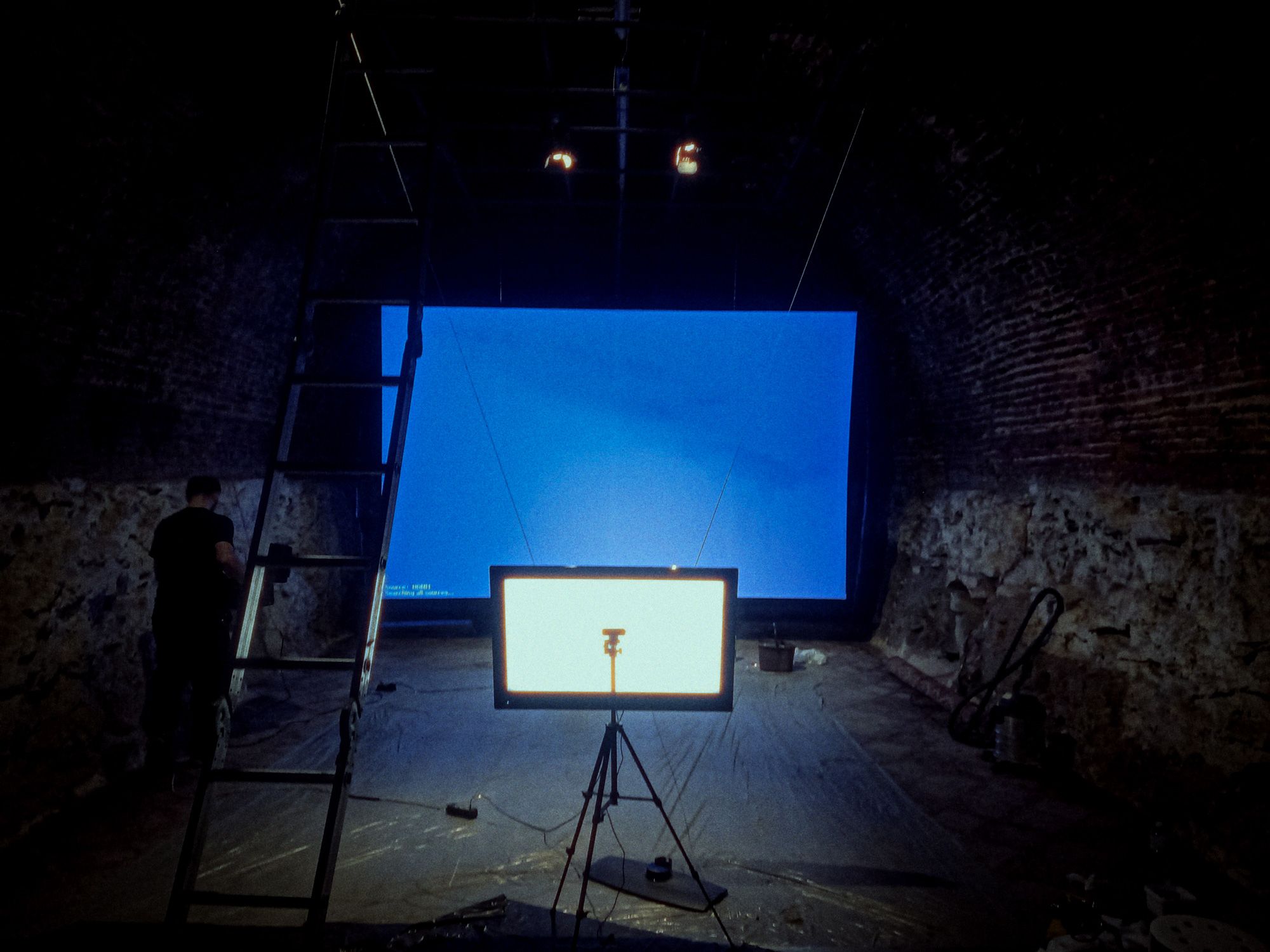
After years of neglect, the building began to be revived in 2017
After years of neglect, the building began to be revived in 2017 through the work of the Talyana Association. Renovation continued through approximately 2020, and a regular programme of exhibitions, concerts, parties, and other cultural events developed during 2021 and 2022.
Today, ReBonkers operates as an independent contemporary-art space and cultural centre. Its multidisciplinary programme encompasses visual art, theatre, dance, film, experimental music, literature, multimedia installations, public discussions, and community events. In October 2023, the publicly owned property was formally granted for use by the Talyana Association.